CALL (503) 822-7567
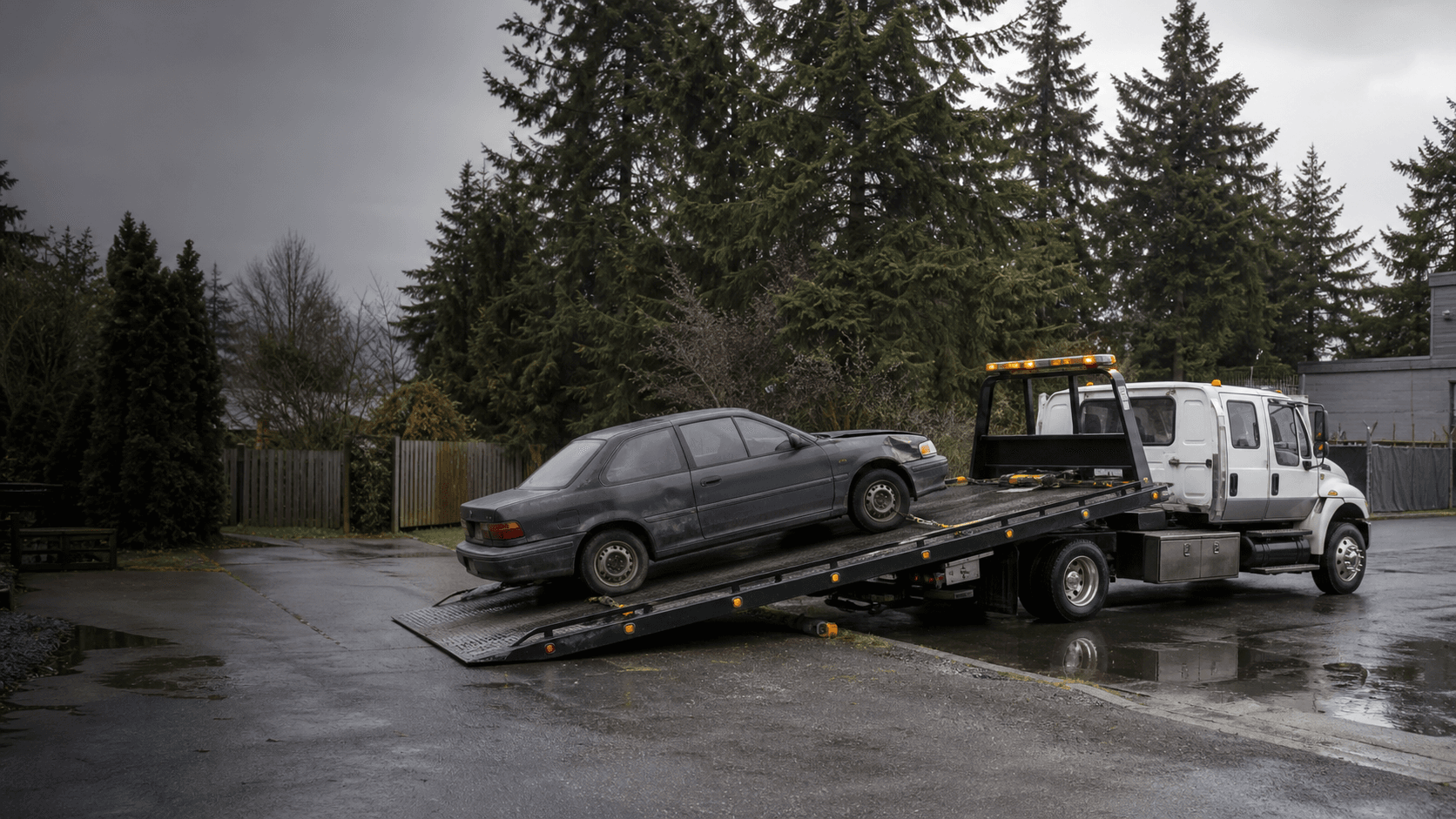
Older damaged car prepared for Oregon pickup: Sell a Car With a Lien in Oregon

LOAN AND LIEN GUIDE

Selling a Car With a Loan or Lien in Oregon

A payoff and lien-release process for Oregon sellers who still owe money on an unwanted or damaged vehicle, including what to do when the car is worth less than the loan.

12 min readUpdated September 7, 2026By CashMyCarOregon

Two situations bring people to this page, and they need different answers. Either the loan is still open and the car has to be paid off before it can be sold, or the loan was cleared years ago and the lender is somehow still printed on the title.

There is a third case that most guides skip entirely, and it is the common one for a damaged or non-running car: the vehicle is worth less than the balance owed. That does not make the sale impossible, but it does change who pays what and in which order.

This guide covers all three, using Oregon DMV's own requirements, and it is specific about the sequence, because doing these steps out of order is what turns a simple sale into a months-long title problem.

QUICK ANSWER

Oregon DMV states that you cannot sell, donate, or gift a vehicle while a loan on it is unpaid. Contact the lienholder for a dated payoff quote, pay the balance through their process, and get either the lienholder's signature on the front of the title or a separate signed statement releasing their interest. Only then does ownership change hands.

01

Oregon's rule, in the DMV's own words

Oregon DMV is unambiguous: you cannot sell, donate, or gift your vehicle if you have a loan on it and the loan is not paid off. The instruction that follows is equally plain, which is to contact your lienholder for information about their loan payoff process.

This is not a formality that a motivated buyer can wave away. Until the lender's interest is released, the lender still has a legal claim on the vehicle, and no amount of paperwork between you and a buyer changes that. A buyer who takes the car anyway cannot title it, and the problem lands back on you.

Any buyer who tells you the loan does not matter, or offers to sort it out later, is telling you they do not intend to title the vehicle properly. Treat that as the end of the conversation.

02

Find out exactly what the lender holds

Start by establishing two facts: whether the lender is recorded as a security interest holder on the Oregon title, and who physically holds the title, you or them.

Then ask the lender for a payoff quote and get five things in writing: the exact amount, the date it expires, the payment methods they accept, how long the release takes after payment clears, and where the release or title is sent once it is done.

Do not work from the balance on your monthly statement. Interest accrues daily, and late charges or processing timing can move the real payoff figure. A quote with an expiry date is the only number worth planning around.

If the loan is with a credit union or a small local lender, ask whether they can produce the release the same day once payment clears. Some can; some take weeks. That timeline decides whether pickup happens this week or next month.

  • Confirm whether the lender is on the title as a security interest holder
  • Confirm who physically holds the title
  • Get a dated payoff quote with an expiry date
  • Ask how long the release takes after payment clears
  • Ask where the release or released title is sent

03

When the car is worth less than the loan

This is the situation most guides ignore, and it is the normal one for a car that has been wrecked, has a failed engine, or has simply aged out. The offer is a few hundred dollars and the balance is a few thousand. The gap is yours to close.

The mechanics are straightforward even when the number is unwelcome. The buyer's payment goes toward the payoff, you pay the shortfall, the lender releases its interest, and the vehicle transfers. What you cannot do is hand over the car and settle the difference later, because the release will not exist and the sale cannot complete.

Two things are worth checking before you accept that you owe the gap. If the vehicle was in a collision or was declared a total loss, an insurance settlement may already be pending and could cover part or all of the balance. And if you bought gap insurance with the loan, this is precisely what it was sold for, so check the policy before you pay out of pocket.

The uncomfortable arithmetic sometimes still favours selling. A non-running car continues to cost money in registration, insurance, and space, and it usually loses value the longer it sits. Paying a shortfall now can be cheaper than carrying the vehicle for another year, but that is a judgement about your own finances, and this article is not the place to make it for you.

04

When the loan is paid but the lender is still on the title

This is common and much easier. The loan cleared, the lender's interest ended, but nobody ever removed them from the Oregon title, so the document still shows a security interest holder.

The fix is a release from that lender. Oregon DMV accepts the lienholder's signature on the front of the title, or a separate signed statement releasing their interest in the vehicle. Contact the lender, tell them the loan is satisfied and you need the release, and expect them to have a routine process for it.

Removing a security interest holder from an Oregon title generally requires the title itself, original releases from any prior security interest holders, and the title fee. If the lender has merged, been acquired, or gone out of business since your loan closed, say so when you call the successor institution, because they usually have a department that handles exactly this.

And if there is no successor to call — the lender dissolved, cannot be located, or simply refuses — be aware that the published route runs out here. DMV's requirements list original lien releases from all previous security interest holders and describe no alternative; we checked its titling page and its buying-and-selling page, and neither sets out a path for a lienholder who cannot be obtained.

That does not mean there is nothing to be done. It means the next step is a conversation with DMV rather than a form you can find. Ring them with the title in front of you and describe the specific situation — who the lender was, when the loan closed, what you have tried. What it definitely is not is a reason to sell anyway and let the buyer deal with it.

05

The release Oregon DMV actually accepts

There are two acceptable forms and it is worth knowing both, because lenders differ in which one they issue.

The first is the lienholder's signature on the front of the Oregon title. The second is a separate, signed statement from the lienholder releasing their interest in the vehicle. Either satisfies DMV; a verbal confirmation or an email saying the account is closed does not.

Keep the original. A photograph or a photocopy of a release is not the release. If the lender sends it to you rather than to DMV or to the buyer, do not let it out of your hands until the transaction is being completed.

If the title is lost as well as encumbered, deal with the replacement title first. Trying to solve a missing title and a lien release at the same moment is how sales stall.

  • Lienholder signature on the front of the title, or
  • A separate signed statement releasing their interest
  • Keep the original document, not a copy
  • Resolve a lost title before, not during, the sale

06

Title jumping, and why it is your problem too

Title jumping is when a buyer takes the vehicle and resells it without ever putting the title in their own name, leaving your name as the last recorded owner. It is a common shortcut among informal buyers and it is a bad outcome for the seller.

The consequence is that the vehicle remains associated with you in the records. Parking citations, towing charges, and questions about what happened to the car can arrive at your address months later, and you will be answering for a vehicle you no longer own.

The protection is ordinary diligence: sell to a buyer who will title the vehicle or process it lawfully, keep the signed release and sale documents, and file your Notice of Sale with Oregon DMV so the record reflects that you transferred the vehicle and when.

07

Payoff fraud and the scams that target lien sales

A car with an open loan is an attractive target, because the transaction legitimately involves a third party and a payment you cannot easily verify in the moment. That extra complexity is exactly what a fraudster uses.

Call your lender using the number on your statement or on their official website. Never use a number that arrives in a text, an email, or from the buyer, however plausible it looks. The Federal Trade Commission has repeatedly warned that online car sellers are targeted with fake payment schemes, and overpayment is the classic version: a payment arrives for more than the agreed amount, you are asked to refund the difference or forward it to cover a fee, and the original payment later fails.

Do not send money to a buyer to release a lien. Do not sign a blank title. Do not release the vehicle before the payment method has genuinely cleared, which for a cheque means cleared, not merely appearing in your balance.

  • Call the lender on a number you looked up yourself
  • Never refund an overpayment to a buyer
  • Never sign a blank title
  • Wait for real clearance, not a provisional balance

08

After the sale: file the notice and keep the file

Once the lien is released and the vehicle has gone, notify Oregon DMV of the sale within 10 days. This is what puts the transfer on the record and starts protecting you from what happens to the car afterwards.

Keep everything together: the payoff quote, proof of payment, the original lien release, the signed title release or bill of sale, the buyer's legal name and address, the payment record, and the pickup receipt. If a question surfaces a year later, that file answers it in one go.

CashMyCarOregon buys vehicles in any condition, including cars with an open loan, provided the payoff is resolved as part of the transaction. Towing is included with an accepted offer inside the confirmed service area. Tell us about the lien when you request an offer rather than at pickup, so the payoff sequence is agreed in advance instead of being discovered on the driveway.

FREQUENTLY ASKED QUESTIONS

Can I sell a car in Oregon if I still owe money on it?

Not until the loan is paid off. Oregon DMV states that you cannot sell, donate, or gift a vehicle while a loan on it is unpaid, and directs sellers to contact the lienholder about their payoff process. The payoff and the release come first, then the transfer.

Is it hard to sell a car with a lien?

It is not hard, but it is sequential and the order matters. Get a dated payoff quote, settle the balance through the lender's process, obtain the signed release, then complete the sale. Problems almost always come from doing those steps out of order rather than from the lien itself.

What if my car is worth less than the loan?

You cover the difference so the lender can release its interest. Before paying out of pocket, check whether you bought gap insurance with the loan and whether an insurance settlement is pending on a collision or total loss, because either may reduce or clear the shortfall.

My loan is paid off but the lender is still on the title. What now?

Ask that lender for a release. Oregon DMV accepts the lienholder's signature on the front of the title or a separate signed statement releasing their interest. Removing a security interest holder generally requires the title, original releases from prior holders, and the title fee.

What kind of lien release does Oregon DMV accept?

Either the lienholder's signature on the front of the Oregon title, or a separate signed statement from the lienholder releasing their interest in the vehicle. An email saying the account is closed is not a release, and you should keep the original document rather than a copy.

What is title jumping in Oregon?

It is when a buyer takes a vehicle and resells it without ever titling it in their own name, leaving you as the last recorded owner. Citations and towing charges can then reach you months later for a car you no longer have. Filing your Notice of Sale is the main protection.

Can I sell a car with a lien if the title is also lost?

Yes, but deal with the replacement title first. Combining a lost-title application with a lien release in a single transaction is where sales stall. Resolve the title, then obtain the release, then sell.

Who pays the lender, me or the buyer?

It depends on how the transaction is structured, which is why it should be agreed in writing beforehand. If the offer exceeds the payoff, the payment can be directed to the lender with the remainder going to you. If the payoff is higher, you generally cover the shortfall so the release can be issued.

Do I still need to file a Notice of Sale?

Yes. Notify Oregon DMV within 10 days of transferring the vehicle, using DMV2U or Form 735-6890, and keep the confirmation. The lien release and the sale notice do different jobs, and you want both in your records.

Will CashMyCarOregon buy a car that still has a loan on it?

Yes, provided the payoff is resolved as part of the transaction. Tell us about the lien when you request the offer rather than at pickup, so the payoff sequence and who pays any shortfall are agreed in advance instead of being worked out on the driveway.

PRACTICAL CHECKLIST

Lien-sale checklist

  • Confirm whether the lender is on the title and who holds it
  • Request a dated payoff quote with an expiry date
  • Compare the payoff against the offer
  • Check for gap insurance or a pending insurance settlement
  • Agree in writing who pays any shortfall, and when
  • Obtain the original signed lien release
  • Complete the title release or bill of sale
  • Notify Oregon DMV of the sale within 10 days

JUNK-CAR SERVICE AREAS FOR THIS GUIDE

USEFUL OREGON RESOURCES

OFFICIAL SOURCES

Rules, forms, fees, and program eligibility can change. Use these primary sources to confirm your situation.

Prepared and reviewed against current Oregon DMV seller instructions on buying and selling a vehicle, Oregon DMV titling guidance, and Federal Trade Commission consumer advice on vehicle sale fraud, on September 7, 2026. This article is general information, not legal or financial advice. Loan payoff procedures differ between lenders, and unusual ownership or debt situations should be confirmed with your lienholder, Oregon DMV, or an appropriate professional.

Reviewed by CashMyCarOregon Editorial Team: Oregon vehicle seller research and editorial review

RELATED OREGON GUIDES

Lost Your Oregon Car Title? Fix This Before You Sell

Read guide

The Oregon DMV Notice of Sale: A 10-Day Checklist for Sellers

Read guide

How to Check an Oregon Junk Car Buyer Before You Sign Anything

Read guide

SELLING THE CAR AS-IS?

Start your Oregon cash offer.

Enter the Oregon ZIP, required VIN, and mileage. NHTSA identifies the vehicle before the pickup questions.

Get My Cash Offer